

Introduction
Choosing the right golf club set can feel like a daunting task. With so many brands, styles, and specifications available, it’s easy to get lost in the jargon—especially if you’re new to the game. But whether you’re just starting out or looking to upgrade your current set, the right clubs can make a huge difference to your performance, confidence, and overall enjoyment on the course.
This guide is here to demystify the process. From understanding the different types of clubs to matching them to your skill level and budget, you’ll learn everything you need to make an informed decision.
Understanding the Basics of a Golf Club Set
What’s in a Standard Set?
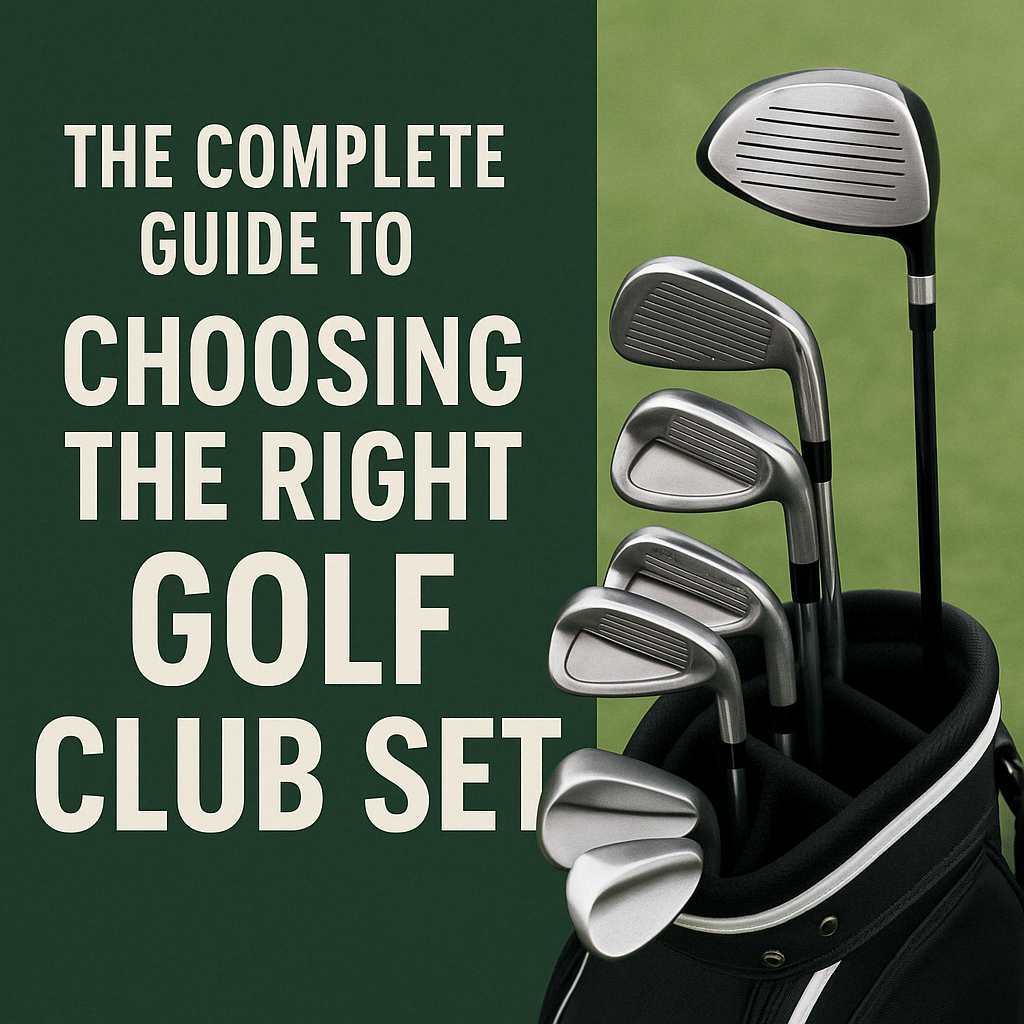
A typical golf club set includes a mix of the following:
- Driver: Used for long-distance tee shots.
- Fairway Woods: Often a 3-wood or 5-wood, used for long shots off the fairway.
- Hybrids: Replace long irons; easier to hit and offer higher ball flight.
- Irons: Generally from 4 through 9, used for a variety of shots depending on distance and lie.
- Wedges: Pitching wedge, sand wedge, gap wedge, and sometimes a lob wedge for short game finesse.
- Putter: The most-used club, critical for finishing each hole.
The 14-Club Rule
The rules of golf allow you to carry up to 14 clubs in your bag during a round. That doesn’t mean you have to carry 14—especially if you’re a beginner. Many starter sets include fewer clubs to keep things simple and budget-friendly. More experienced players can use all 14 to fine-tune their shot selection across varying conditions and courses.
Golf Club Types Explained
Drivers & Fairway Woods
- Drivers have the largest club heads and lowest lofts, designed for maximum distance.
- Fairway Woods offer more loft and are easier to hit from the fairway or light rough.
- Woods usually come in lofts ranging from 13–21 degrees. Lower lofts are harder to hit but travel further.
Hybrids
Hybrids combine the best of both woods and irons. They’re great for longer approach shots and offer a higher launch with more forgiveness. Most beginners and many intermediates find them easier to use than traditional long irons.
Irons
Irons are numbered 3–9 and are used for a wide range of shots. Shorter irons (7–9) offer more loft and control. There are two main types:
- Cavity-back Irons: Designed for forgiveness, ideal for beginners.
- Muscle-back/Blade Irons: Offer greater feel and workability, suited for advanced players.
Game-improvement irons often feature perimeter weighting and wider soles to help newer players launch the ball more easily and reduce mishits.
Wedges
These specialised irons are essential for scoring:
- Pitching Wedge (PW): Used for 100–130m approach shots.
- Gap Wedge (GW): Fills the distance gap between PW and SW.
- Sand Wedge (SW): Ideal for bunker play and chips.
- Lob Wedge (LW): For high, soft shots around the green.
Loft and bounce matter—make sure the gaps between your wedges allow for consistent yardages without overlap.
Putters
This club is all about feel. Putters come in two main styles:
- Blade: Traditional look and feel.
- Mallet: Larger head, more forgiving.
Consider factors like toe hang, alignment aids, and face insert when selecting a putter. If you struggle with consistency, a face-balanced mallet might help.
When to Use Each Club
- Tee shots: Driver or 3-wood
- Fairway shots: Irons or fairway woods
- Short game: Wedges
- Green: Putter
Learning basic yardages for each club will help you make better decisions during a round.
Matching Your Set to Your Skill Level
Beginners
- Prioritise forgiveness and ease of use.
- Look for game improvement sets with cavity-back irons and hybrids.
- Consider a pre-built package set for convenience and value.
- Choose a high-lofted driver (10.5–12.5 degrees) to make getting the ball airborne easier.
Intermediate Players
- Transition to more customised setups.
- Add or replace clubs for better distance gaps.
- Focus on shaft flex and material to match your swing.
- Begin to fine-tune wedge and putter selection to suit playing style.
Advanced Golfers
- Precision is key.
- Custom-fitted forged irons and adjustable drivers.
- High-end wedges and putters tailored to preference.
- Track data using tools like launch monitors or Arccos to optimise club selection.
Not Sure of Your Level?
If you typically shoot over 100, you’re likely a beginner. Scores around 90–100 suggest intermediate. Consistently under 90? You may be ready for advanced gear.
Understanding Shaft Options
Shaft Material
- Steel: Heavier, more consistent, suited for stronger players.
- Graphite: Lighter, absorbs vibration, ideal for slower swing speeds.
- Graphite shafts are especially helpful for seniors, juniors, or players with injuries.
Shaft Flex
Your swing speed determines your ideal flex:
- Extra Stiff: Fast swing speed (110+ mph)
- Stiff: Moderate-fast (95–110 mph)
- Regular: Average (85–95 mph)
- Senior & Ladies: Slower swings (<85 mph)
Using the wrong flex can result in hooks, slices, or lost distance.
Shaft Length & Lie
Custom fitting for length and lie angle can significantly improve accuracy. Taller or shorter players benefit most from these adjustments. A flat lie might work better for players with an upright swing, and vice versa.
Club Fitting: Is It Worth It?
What is Club Fitting?
A professional fitter assesses your swing, body dimensions, and preferences to tailor your clubs. This may include:
- Shaft flex
- Club length
- Lie angle
- Grip size
- Swing weight
Why It Matters
- Enhances consistency and accuracy
- Helps avoid bad swing habits
- Boosts confidence
- Makes the most of your investment
Is It Worth the Cost?
Yes—especially if you’re investing in high-end clubs or playing regularly. Many retailers offer free fittings with purchase, and even a basic fitting session can offer valuable insights.
Budgeting and Brand Considerations
How Much Should You Spend?
- Beginners: $500–$1,000
- Intermediates: $1,000–$2,000
- Advanced: $2,000+
Pricing varies based on new vs used, package vs custom, and brand reputation.
New vs Used Clubs
Used clubs are a great way to save money:
- Ensure no shaft damage or excessive wear
- Re-gripping is cheap and worthwhile
- Look for certified pre-owned programs for peace of mind
Best Brands by Level
- Beginners: Wilson, Strata, Tour Edge
- Mid-level: TaylorMade, Callaway, Cobra
- Advanced: Titleist, Mizuno, PXG
Each brand often has multiple product lines targeting different types of players—look for keywords like “game improvement,” “players,” or “tour.”
Package Sets vs Custom Builds
- Package Sets: Affordable, ready to go
- Custom Builds: Tailored performance, greater cost
Some players start with a package set and then slowly upgrade individual clubs as they learn more about their needs.
Where to Buy Clubs
In-store vs Online
- In-store: Hands-on testing, fittings, immediate feedback
- Online: Convenience, wide selection, better deals
Demo days at local courses or stores can be a great opportunity to try multiple brands and setups in a single session.
Buying Used: What to Check
- Grip condition
- Shaft wear or damage
- Clubhead grooves and face integrity
- Authenticity (especially on resale platforms)
Recommended Retailers
- Australia: Drummond Golf, GolfBox
- Online: GlobalGolf, Callaway Pre-Owned, Facebook Marketplace, eBay, Golf Avenue
Make sure any used purchase includes return policies or buyer protection.
Final Tips for First-Time Buyers
- Don’t feel pressured to buy 14 clubs upfront
- Test different clubs at a range or during demo days
- Focus on comfort and confidence, not just brands
- You can always upgrade as your game improves
- Prioritise clubs that give you confidence over those used by professionals
Conclusion
Choosing the right golf club set is an important step in your golfing journey—but it doesn’t have to be intimidating. Whether you’re a beginner looking for forgiveness or an experienced player chasing precision, the right clubs can elevate your game and help you enjoy every round more.
Start with what fits your game today, and let your set evolve with you. After all, the best club in your bag is the one you trust when it matters most.
As your skills grow, so too can your clubs. Take your time, test your options, and enjoy the process—it’s all part of becoming a better golfer.